Treating Sciatica With Physical Therapy: Does Your PT Plan Mean Rest?
Mostly exercise, plus hands-on work, education and sometimes heat or cold. Why your moves depend on the cause, and what 5 sources say about timing.

Expect to move more, not less. Spine-Health says a physical therapist (PT) may prescribe a mix of “physical, manual, soft tissue mobilization, and/or exercise therapies.” The same page adds that the specific exercises depend on what is causing your sciatica.
If you’re weighing treating sciatica with physical therapy, all 5 sources compared below name exercise. Hands-on work shows up in 3 of them, passive techniques such as heat in 2, and a referral path in just 1.
See a clinician first if this sounds like you. Clinic pages from GSPP Rehabilitation and Benchmark Physical Therapy list leg weakness and bowel or bladder changes as warning signs. HSS (Hospital for Special Surgery) advises seeing a doctor if symptoms last “more than a week or two.”
Sciatica Follows One Nerve, So Tell Your PT Which Task Hurts Most
Your sciatic nerve runs “from your lower back all the way down to your feet,” per The Advanced Spine Center. That long path is why the pain can travel down one leg instead of staying in your back.
It also explains why so many daily moves can hurt. Benchmark Physical Therapy notes that sciatica can make sitting, standing, bending and walking difficult. Before your first visit, note which of those 4 gives you the most trouble. Because the exercises follow the cause, that detail gives your PT a starting point.
For the step-by-step version, see physical therapy treatment of sciatica: your cause picks the exercises.
A Few Days in Bed Can Work Against You
Crawling into bed for a few days can feel like the safe move. GSPP Rehabilitation warns that it “can be counterproductive.” Easing off and shutting down are two different things.
During a flare, Hinge Health suggests you “scale back on activity for a day or two.” That means a lighter load, not a full stop. It’s also the part that costs nothing: you can scale back without going to bed before you ever book a visit, and a PT plan builds on that.
All 5 Sources Name Exercise, and 3 Add Hands-On Work
Strengthening comes up in 4 of the 5 sources counted below, and stretching in 3. Spine-Health describes a focus on “strengthening lower back and hip muscles.” Lifestyle PT and Hinge Health both list core strengthening exercises. Hinge Health also names “hip and hamstring stretches.”
Hands-on work comes next. Spine-Health includes soft tissue mobilization, which means a PT working on your muscles and other soft tissue by hand. Lifestyle PT lists “Manual Therapy: Hands-on techniques” in its plan.
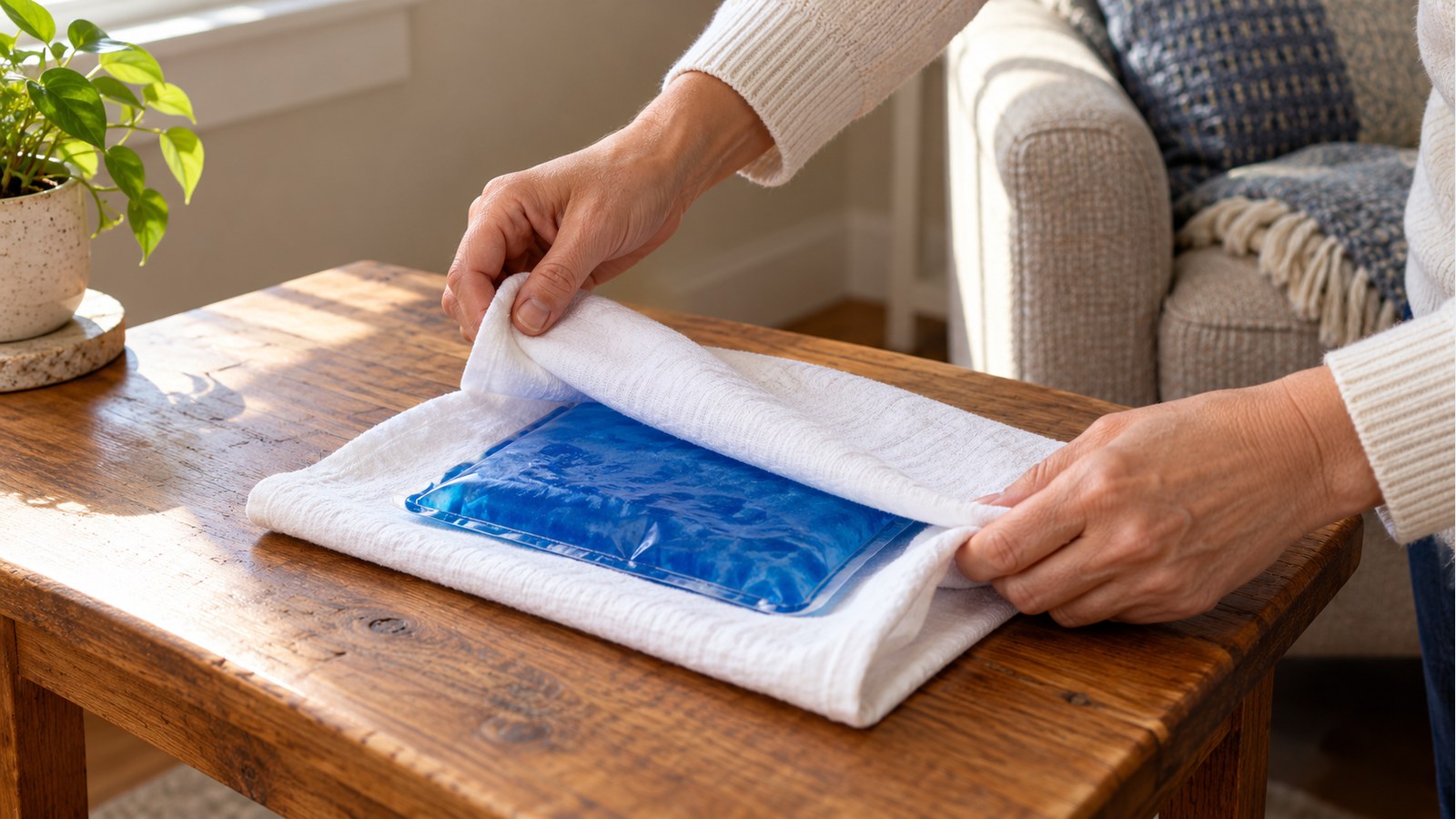
Some plans add modalities, meaning heat, cold or a machine applied to the body. Lifestyle PT says heat, cold, ultrasound or electrical stimulation “may be used to reduce inflammation and pain.” Spine-Health has a section on “Physical Therapy Aids and Passive Techniques.” These are things done to you, not skills you practice yourself.
The longer goal is to manage it on your own. According to Hinge Health, PT “helps reduce symptoms and equips you with tools to prevent future flare-ups.”
The table counts 5 of the 8 pages behind this article: Spine-Health, the PubMed Central review, Lifestyle PT, HSS and Hinge Health. The other 3 supply the nerve, daily-limit, bed-rest and warning-sign facts above. A count shows what these pages describe, not how well each part works.
| PT part | Sources naming it (n of 5) | Which sources | Short quote |
|---|---|---|---|
| Exercise | 5 of 5 | Spine-Health, review, Lifestyle PT, HSS, Hinge Health | “and/or exercise therapies” (Spine-Health) |
| Strengthening | 4 of 5 | Spine-Health, Lifestyle PT, HSS, Hinge Health | “strengthening lower back and hip muscles” (Spine-Health) |
| Stretching | 3 of 5 | Lifestyle PT, HSS, Hinge Health | “hip and hamstring stretches” (Hinge Health) |
| Manual and soft tissue work | 3 of 5 | Spine-Health, review, Lifestyle PT | “Manual Therapy: Hands-on techniques” (Lifestyle PT) |
| Tools for future flare-ups | 3 of 5 | Spine-Health, Lifestyle PT, Hinge Health | “tools to prevent future flare-ups” (Hinge Health) |
| Passive techniques, such as heat, cold or electrical stimulation | 2 of 5 | Spine-Health, Lifestyle PT | “Heat, cold, ultrasound, or electrical stimulation” (Lifestyle PT) |
| Education | 2 of 5 | Review, Lifestyle PT | “teach patients how to avoid further aggravating their symptoms” (Lifestyle PT) |
| Referral path | 1 of 5 | HSS | “a referral to a sciatica specialist” (HSS) |
Read it from the top down. The parts you do yourself are named most often: exercise by all 5, strengthening by 4 and stretching by 3. Passive techniques come up in 2. If your sessions lean on those, it’s fair to ask when the exercise part starts.
The Review Calls PT’s Effectiveness for Sciatica Controversial
A systematic review gathers every trial it can find on one question, and a meta-analysis combines their numbers. This review on PubMed Central notes that physiotherapy is “prescribed as first-line treatment” for sciatica, yet “their effectiveness remains controversial.” It set out to measure short-, medium- and long-term effects against control care.
It counted exercise, manual therapy, physiotherapy-led education, or a mix of these as physiotherapy. The comparison could be other care, such as surgery or care from a general practitioner, your family doctor. It could also be “placebo, sham or no intervention,” per the same review. A sham is a fake version of a treatment that looks real.
Two points follow. Heat, cold and electrical stimulation are not among the examples the review names. And it is the only one of the 5 sources here that weighs PT against a comparison. The other 4 describe what PT includes.
One Clinic Sees Improvement Within Weeks; Chronic Cases Can Take Months
Lifestyle PT reports that “in many cases, patients start noticing improvement within a few weeks of physical therapy.” The same page puts visits at “2-3 sessions per week initially.” It adds that “for chronic or severe cases, treatment may take several months.”
That’s one clinic’s observation, not a trial result, so your own timeline may be shorter or longer.
If PT isn’t enough, HSS says your PT can give you a referral to a sciatica specialist. That step depends on your PT making the call. At the first visit, ask how your progress will be checked and what would lead to a referral.
Verdict: Expect an Exercise-Led Plan Fitted to Your Cause
- What it is: an exercise-led plan, with hands-on work, education and sometimes heat or electrical stimulation around it, chosen to fit the cause of your sciatica.
- The flaw, and its fix: the review’s authors write that PT’s effectiveness for sciatica “remains controversial.” Fix: ask your PT what cause the plan targets, then check progress a few weeks in, when Lifestyle PT says many patients start noticing improvement. If PT isn’t enough, HSS says your PT can refer you to a sciatica specialist.
- Strengths: it swaps bed rest for movement, it’s matched to your cause, and it aims to leave you with tools for future flare-ups.
- Who should get medical care first: anyone with leg weakness or bowel or bladder changes should see a clinician before starting a PT plan.
Next step: The National Institutes of Health (NIH) is the US government’s medical research agency. If your plan includes hands-on spinal work, read spinal manipulation for back pain: what NIH says.
Sciatica Physical Therapy FAQ
Is a Sham the Same as a Placebo?
They’re close, but not the same. A placebo is usually a pill or treatment with nothing active in it. A sham copies a procedure but leaves out the part that’s meant to work. The review accepted either one as a comparison.
Does a Comparison With Surgery Mean PT Replaces Surgery?
No. It means the review allowed trials that set the two side by side. Which one fits your case is a question for a clinician who knows what is causing your sciatica.
What Should I Write Down Before the First Visit?
Write down which of sitting, standing, bending or walking is hardest and how long your symptoms have lasted. Add any leg weakness or bowel or bladder changes. Those details match the daily limits and warning signs the sources above name.
This page is general information from public health and clinic sources, not medical advice. See a clinician if your symptoms last more than a week or two, and don’t wait if you notice leg weakness or bowel or bladder changes.
Sources
- https://www.spine-health.com/conditions/sciatica/physical-therapy-and-exercise-sciatica
- https://pmc.ncbi.nlm.nih.gov/articles/PMC9925551/
- https://pennrehab.org/how-physical-therapy-can-help-sciatica-lower-back-pain/
- https://www.benchmarkpt.com/blog/physical-therapy-for-sciatic-nerve-pain/
- https://theadvancedspinecenter.com/managing-sciatica-with-physical-therapy/
- https://www.hss.edu/health-library/move-better/sciatica-stretches
- https://www.lifestyleptny.com/blog/2025/february/part-3-the-role-of-physical-therapy-in-treating-/
- https://www.hingehealth.com/resources/articles/physical-therapy-for-sciatica/